AirFryHub

Air Fryer Hard-Boiled Eggs — Time & Temperature

Quick Answer

Hard-boiled — fully set yolk

Air fry hard-boiled eggs at 250 degrees Fahrenheit for 15 to 17 minutes.

Ice bath immediately after. Yolk is firm throughout. Peels very easily.

Internal temp: 160°F. 160°F applies to egg dishes. For whole eggs, cook until both yolk and white are firm.
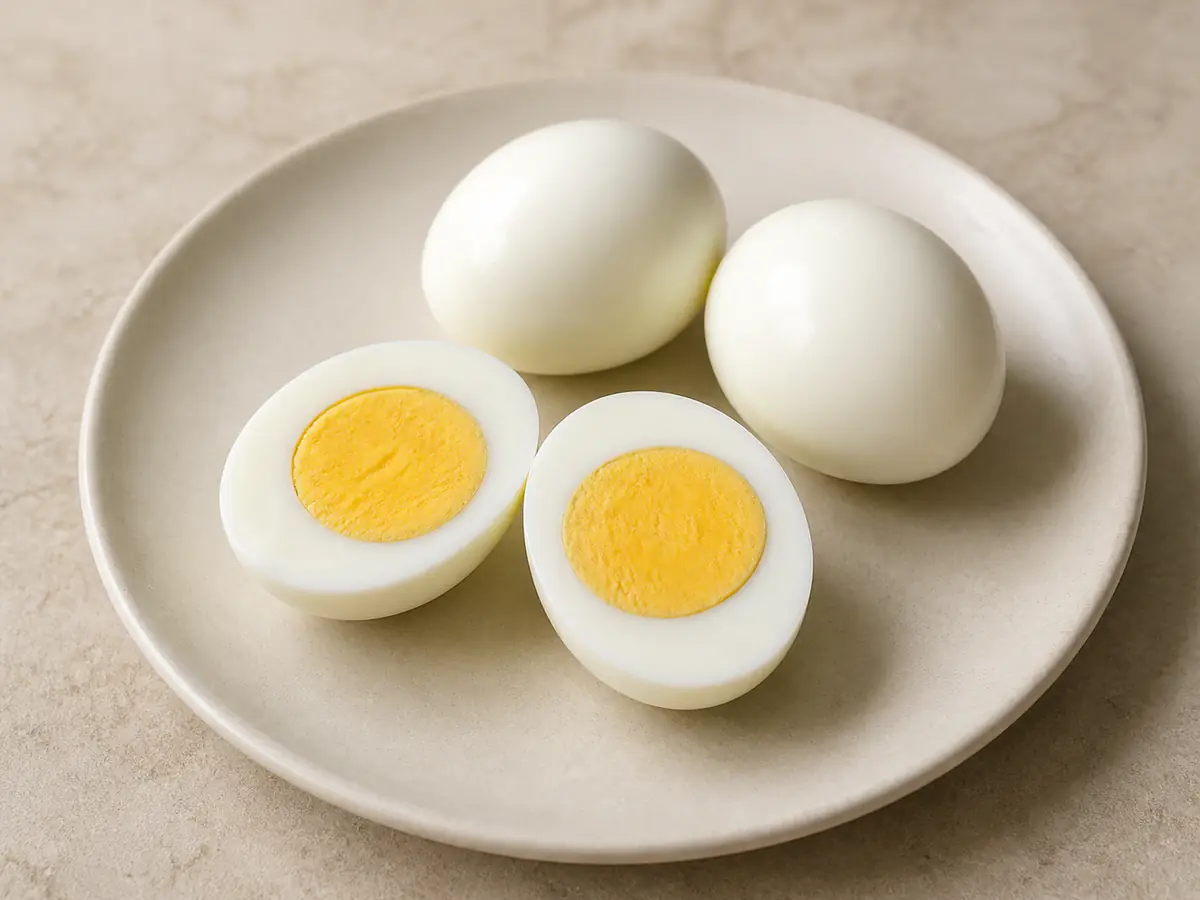
Air-fried Hard-Boiled Eggs with a naturally browned surface.
Illustrative serving result. Browning and texture vary by food size, basket load, and air fryer.

Cooking Time & Temperature

Cut / variantTempTimeNotes
Hard-boiled — fully set yolk250°F120°C15–17 minIce bath immediately after. Yolk is firm throughout. Peels very easily.

Personalize this cook

Adjust the selected timing estimate for portions, basket airflow, reheating, and doneness checks.

Portion & basket adjuster

Basket airflow

Adjusted cook: 250°F · 15–17 min

Start checking: 15 min.

Reheat mode

For already-cooked leftovers; use the main table for raw food.

Reheat estimate: 325°F / 165°C · 3–6 min

Reheat leftovers until hot all the way through; use a thermometer for meat, poultry, seafood, or egg dishes.

Doneness checker

Use time as a guide, then verify the center with a thermometer.

Eggs & egg dishes

Target internal temp: 160°F

Start checking: 13 min.

Measure at the thickest part, away from bone or basket edges.

Food Safety

Eggs & egg dishes: cook to 160°F (71°C). 160°F applies to egg dishes. For whole eggs, cook until both yolk and white are firm.

Source: USDA FSIS — Safe Minimum Internal Temperatures

Tips

  • Use large eggs straight from the refrigerator — the cold shell going into a 250°F environment is gentler than a hot oven, and results are very consistent.
  • Transfer eggs immediately to an ice-water bath the moment the timer ends — carryover heat continues cooking the yolk for 1–2 minutes after removal.
  • The low temperature (250°F) is key; higher temperatures can crack the shells or make the whites rubbery.
  • Air-fried hard-boiled eggs peel significantly more easily than water-boiled eggs — the inner membrane dries slightly and releases from the white cleanly.
  • Do not stack eggs; place in a single layer in the basket for even, consistent results across a batch.

Common Mistakes

  • Skipping the ice bath — even 2 minutes without the ice bath produces an over-set yolk as the residual heat continues cooking.
  • Using too high a temperature (above 270°F); at higher temperatures the shells can crack and the whites develop a rubbery, sulphurous texture.
  • Not accounting for size variation — jumbo eggs need 1–2 extra minutes compared to large.
  • Cooking without leaving enough space between eggs; while stacking rarely causes problems at 250°F, airflow around each egg produces the most consistent results.
  • Pulling at different times in the same batch; all eggs in a batch should cook for the same duration for consistent yolk doneness.

Result came out wrong?

Fast Hard-Boiled Eggs fixes for the most common texture and doneness misses.

Use these fixes after a first attempt, then change only one variable at a time so you can tell what improved the next batch.

Dry or tough

Lower the next batch by 10-15°F or start checking Hard-Boiled Eggs 2 minutes earlier. Keep pieces even in size and rest meat before slicing.

Soggy surface

Pat dry, avoid overcrowding, and add a light oil mist only after seasoning so airflow can crisp the surface.

Browning too fast

Drop the temperature one step, use the lower time range, and move sugar-heavy marinades or sauces to the final minutes.

Cold center

Split thicker pieces, preheat when recommended, and add short 1-2 minute bursts instead of restarting a full cook cycle.

Source & methodology

How we verify timings
Dataset
1 fresh preparation. Choose the closest cut, size and starting condition.
Units and appliance
Cooking Celsius values are rounded to practical dial settings. Your appliance may not offer every setting; consult its manual and check the food early.
Safety source
Eggs & egg dishes uses USDA FSIS — Safe Minimum Internal Temperatures; target 160°F (71°C).
Timing status
Editorial estimate. Not a lab measurement or manufacturer-specific instruction.
Review
Reviewed by Maks.

What supports these times?

The minutes are editorial starting estimates. No reproducible cooking log is attached to this food. Use the stated size and preparation, leave room for airflow, and check the endpoint rather than relying on the timer.

No food-specific manufacturer timing reference has been verified for these rows.

  • FoodSafety.gov — Safe Minimum Internal Temperatures

    Minimum internal endpoints and required rest periods. Does not validate air-fryer settings or minutes. Whole eggs and shellfish also have specific appearance guidance in the chart.

    Source section: Temperature chart: poultry, meat, seafood, eggs and leftovers. Reference checked: .

FAQ

How long do you air fry hard-boiled eggs?
Place whole eggs (in shell) in the air fryer basket at 250°F (121°C) for 15–17 minutes for fully hard-boiled yolks. Transfer immediately to an ice-water bath for 5 minutes to stop cooking. At 15 minutes the yolk is just set; at 17 minutes it is firm throughout. Unlike water-boiled eggs, air-fried eggs peel very easily — the shell separates cleanly.
Why do air-fried hard-boiled eggs peel so easily?
The dry heat of an air fryer causes the inner membrane between the egg white and shell to dry out slightly, which breaks the adhesion that makes traditionally boiled eggs hard to peel. Combined with the ice-water bath after cooking, air-fried hard-boiled eggs consistently peel in just a few seconds — a major advantage over stovetop methods.
Can you make soft-boiled eggs in the air fryer too?
FoodSafety.gov recommends cooking whole eggs until both white and yolk are firm. Soft or runny yolks do not meet that recommendation. For whisked egg dishes, verify 160°F (71°C) before removal. Use the fully set row on the food page as an estimate and check the result; do not depend on carryover heat.

Step-by-Step Guide

How to Air Fry Hard-Boiled Eggs — Complete Guide →

Last updated September 5, 2026 · Reviewed by Maks