Portion & basket adjuster
Adjusted cook: 390°F · 9–12 min
Start checking: 9 min.
Loading…
Quick Answer
Fillet — standard (1–1.5 in / 2.5–4 cm thick, 6 oz / 170 g)
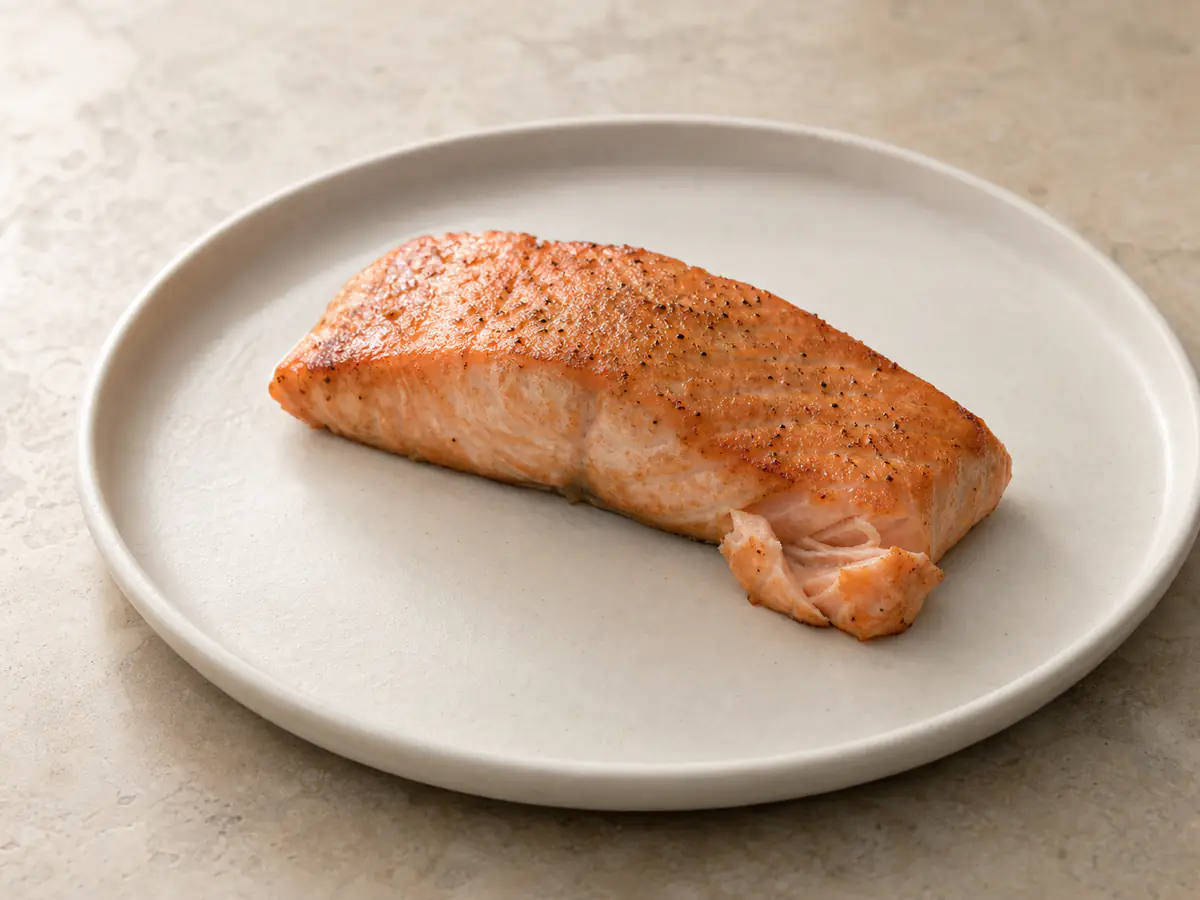
Air fry salmon at 390 degrees Fahrenheit for 9 to 12 minutes.
Skin-side down; no flip needed.
Internal temp: 145°F. 145°F is the fish temperature target. Fish should be opaque and flake easily; shrimp, lobster and scallops should have pearly or white, opaque flesh.
| Cut / variant | Temp | Time | Notes |
|---|---|---|---|
| Fillet — thin (≤ 1 in / 2.5 cm thick) | 390°F200°C | 7–9 min | Check at 7 min; thin fillets overcook fast. |
| Fillet — standard (1–1.5 in / 2.5–4 cm thick, 6 oz / 170 g) | 390°F200°C | 9–12 min | Skin-side down; no flip needed. |
| Fillet — thick (1.5+ in / 4+ cm, 8+ oz / 225+ g) | 390°F200°C | 12–15 min | Center will be just opaque; rest 2 min. |
| Skin-on fillet — crispy skin | 400°F205°C | 10–13 min | Pat skin very dry; place skin-side down; do not flip. |
| Cut / variant | Temp | Time | Notes |
|---|---|---|---|
| Frozen fillet (6 oz / 170 g, no glaze) | 390°F200°C | 14–18 min | Cook straight from frozen; add seasoning at the halfway point when surface thaws. |
Adjust the selected timing estimate for portions, basket airflow, reheating, and doneness checks.
Adjusted cook: 390°F · 9–12 min
Start checking: 9 min.
For already-cooked leftovers; use the main table for raw food.
Reheat estimate: 325°F / 165°C · 2–5 min
Reheat leftovers until hot all the way through; use a thermometer for meat, poultry, seafood, or egg dishes.
Use time as a guide, then verify the center with a thermometer.
Fish & shellfish
Target internal temp: 145°F
Start checking: 7 min.
Measure at the thickest part, away from bone or basket edges.
Fish & shellfish: cook to 145°F (63°C). 145°F is the fish temperature target. Fish should be opaque and flake easily; shrimp, lobster and scallops should have pearly or white, opaque flesh.
Fast Salmon fixes for the most common texture and doneness misses.
Use these fixes after a first attempt, then change only one variable at a time so you can tell what improved the next batch.
Salmon overcooks fast. Start checking 2 minutes earlier, pull at 145°F, and use the lower end of the range for thin fillets.
A little is normal, but a thick white layer usually means the fish ran too hot or too long. Lower the next cook slightly and check earlier.
Oil the basket lightly or use perforated parchment. Let the fillet release before lifting; forcing it tears the surface.
Thick center-cut fillets need the upper end of the range. Add 1-2 minute bursts and measure in the thickest part.
The minutes are editorial starting estimates. No reproducible cooking log is attached to this food. Use the stated size and preparation, leave room for airflow, and check the endpoint rather than relying on the timer.
Manufacturer examples with specific loads and modes: TurboBlaze CAF-DC601-KUS. These do not replace the universal estimates above.
USDA supports the safety endpoint, not a universal air-fryer duration. Manufacturer charts are model-specific and do not cover every thickness, load, or fresh/frozen row, so the site range remains an editorial estimate.
Minimum internal endpoints and required rest periods. Does not validate air-fryer settings or minutes. Whole eggs and shellfish also have specific appearance guidance in the chart.
Source section: Temperature chart: poultry, meat, seafood, eggs and leftovers. Reference checked: .
Last updated September 5, 2026 · Reviewed by Maks