Portion & basket adjuster
Adjusted cook: 400°F · 7–10 min
Start checking: 7 min.
Quick Answer
Large sea scallops — U-10 to U-15 (1.5–2 oz / 42–55 g each)
Air fry scallops at 400 degrees Fahrenheit for 7 to 10 minutes.
Space each scallop apart; do not crowd. Check at 7 min — overcooked scallops turn rubbery.
Internal temp: 145°F. 145°F is the fish temperature target. Fish should be opaque and flake easily; shrimp, lobster and scallops should have pearly or white, opaque flesh.
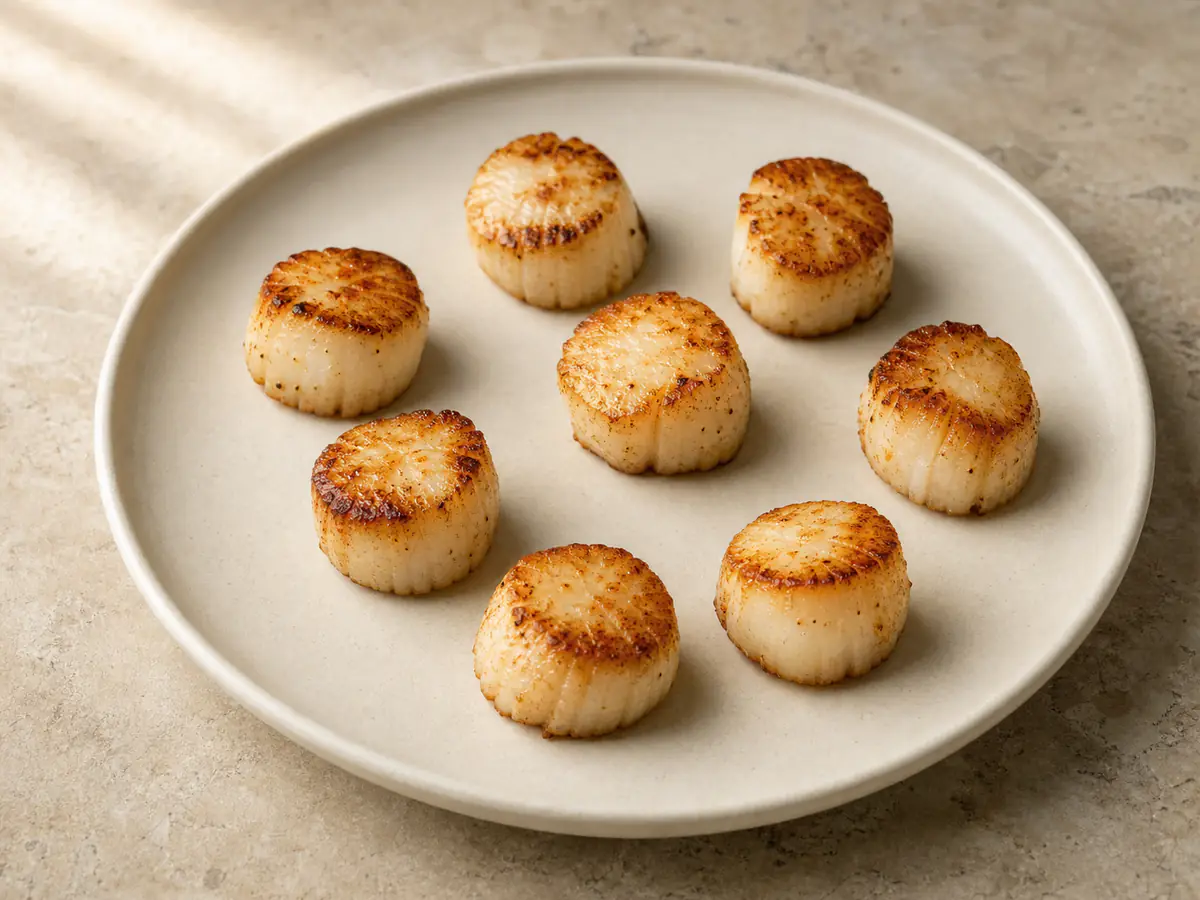
| Cut / variant | Temp | Time | Notes |
|---|---|---|---|
| Medium sea scallops — U-20 (about 1 oz / 28 g each) | 400°F205°C | 6–8 min | Flip at 4 min · Pat completely dry. Preheat well. Done when opaque and edges are golden. |
| Large sea scallops — U-10 to U-15 (1.5–2 oz / 42–55 g each) | 400°F205°C | 7–10 min | Flip at 5 min · Space each scallop apart; do not crowd. Check at 7 min — overcooked scallops turn rubbery. |
| Bay scallops (small, under ½ oz / 14 g each) | 390°F200°C | 4–6 min | Very small — cook fast. Shake basket at 3 min. Done when opaque; no browning needed. |
Adjust the selected timing estimate for portions, basket airflow, reheating, and doneness checks.
Adjusted cook: 400°F · 7–10 min
Start checking: 7 min.
For already-cooked leftovers; use the main table for raw food.
Reheat estimate: 325°F / 165°C · 2–5 min
Reheat leftovers until hot all the way through; use a thermometer for meat, poultry, seafood, or egg dishes.
Use time as a guide, then verify the center with a thermometer.
Fish & shellfish
Target internal temp: 145°F
Start checking: 5 min.
Measure at the thickest part, away from bone or basket edges.
Fish & shellfish: cook to 145°F (63°C). 145°F is the fish temperature target. Fish should be opaque and flake easily; shrimp, lobster and scallops should have pearly or white, opaque flesh.
Fast Scallops fixes for the most common texture and doneness misses.
Use these fixes after a first attempt, then change only one variable at a time so you can tell what improved the next batch.
Lower the next batch by 10-15°F or start checking Scallops 2 minutes earlier. Keep pieces even in size and rest meat before slicing.
Pat dry, avoid overcrowding, and add a light oil mist only after seasoning so airflow can crisp the surface.
Drop the temperature one step, use the lower time range, and move sugar-heavy marinades or sauces to the final minutes.
Split thicker pieces, preheat when recommended, and add short 1-2 minute bursts instead of restarting a full cook cycle.
The minutes are editorial starting estimates. No reproducible cooking log is attached to this food. Use the stated size and preparation, leave room for airflow, and check the endpoint rather than relying on the timer.
No food-specific manufacturer timing reference has been verified for these rows.
Minimum internal endpoints and required rest periods. Does not validate air-fryer settings or minutes. Whole eggs and shellfish also have specific appearance guidance in the chart.
Source section: Temperature chart: poultry, meat, seafood, eggs and leftovers. Reference checked: .
Last updated September 5, 2026 · Reviewed by Maks