How to Air Fry Lobster Tail
Quick Answer
For lobster tail — medium tail (6 oz / 170 g, shell-on) — start with 380°F (195°C) for an estimated 7–9 minutes. Cook fish to 145°F (63°C); shellfish should have pearly or white, opaque flesh. Use the preparation steps below and the full table for other sizes or starting conditions.
- FoodSafety.gov — Safe Minimum Internal Temperatures
Minimum internal endpoints and required rest periods. Does not validate air-fryer settings or minutes. Whole eggs and shellfish also have specific appearance guidance in the chart.
Source section: Temperature chart: poultry, meat, seafood, eggs and leftovers. Reference checked: .
Timing for this size and preparation
Estimated starting range for Lobster Tail. Thickness, basket load and your appliance can change the time; check the food before serving.
- Temperature
- 380°F / 195°C
- Time range
- 7–9 min
- Table row
- Medium tail (6 oz / 170 g, shell-on)
Use the full Air Fryer Lobster Tail timing page for row notes, related foods, and safety reminders.
What supports these times?
The minutes are editorial starting estimates. No reproducible cooking log is attached to this food. Use the stated size and preparation, leave room for airflow, and check the endpoint rather than relying on the timer.
No food-specific manufacturer timing reference has been verified for these rows.
Preparing the Lobster Tail
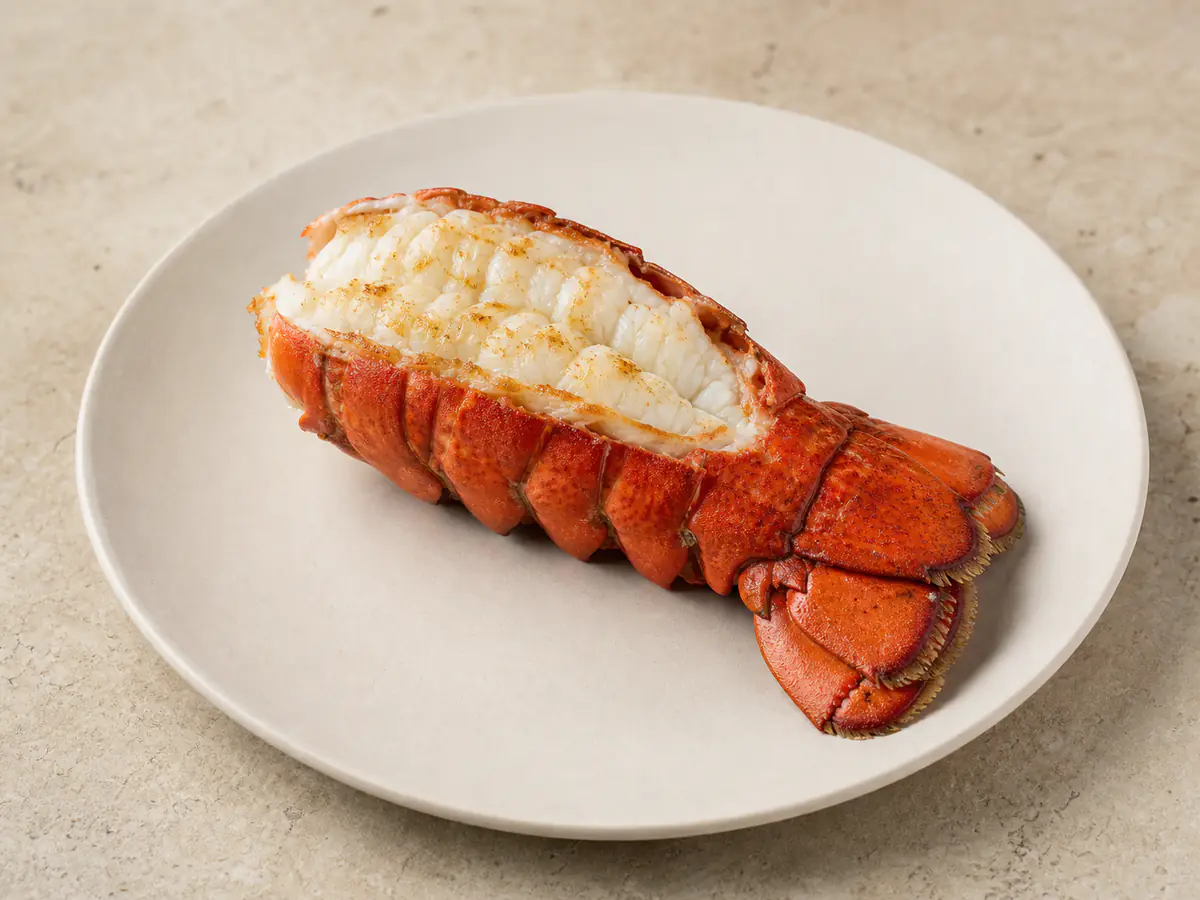
Use kitchen scissors to cut through the top of the shell from the cut end toward the tail fin, stopping before the fin. Gently pry the shell apart and lift the meat up and over the shell, keeping it attached at the base. This butterflied presentation ensures even cooking and allows the seasoning to penetrate. Rinse under cold water and pat dry.
Seasoning
Make a simple garlic butter: melt 2 tablespoons of butter with 2 cloves of minced garlic, a pinch of paprika, salt, and a squeeze of lemon. Brush generously over the exposed meat. Reserve some butter for serving. Old Bay seasoning, parsley, and a dash of cayenne are classic additions.
Temperature and Time
Use the medium tail (6 oz / 170 g, shell-on) preparation. Set the air fryer to 380°F (195°C); the starting range is 7–9 minutes. Check at the lower end and continue as needed; thickness, load and the appliance affect the actual time. Cook fish to 145°F (63°C); shellfish should have pearly or white, opaque flesh.
Checking Doneness
The clearest sign of a cooked lobster tail is the color change: raw meat is translucent grey-white, cooked meat is fully opaque white with no grey remaining. The shell will turn bright red-orange. If any translucent areas remain, return to the air fryer for 1–2 more minutes.
Serving
Serve immediately with drawn butter and lemon wedges. Lobster tail is best eaten the moment it comes out of the air fryer — it loses tenderness quickly as it cools. Pairs well with air-fried asparagus or a simple green salad.
Frequently Asked Questions
- What temperature to air fry lobster tail?
- Small tail (4 oz / 115 g, shell-on): 380°F (195°C), 5–7 min; Medium tail (6 oz / 170 g, shell-on): 380°F (195°C), 7–9 min; Large tail (8 oz / 225 g, shell-on): 375°F (190°C), 9–12 min. These are editorial starting ranges, not a doneness test. Match the size and starting condition; use the safety endpoint on the food page and continue cooking if needed.
- How long to cook lobster tail in air fryer?
- Small tail (4 oz / 115 g, shell-on): 380°F (195°C), 5–7 min; Medium tail (6 oz / 170 g, shell-on): 380°F (195°C), 7–9 min; Large tail (8 oz / 225 g, shell-on): 375°F (190°C), 9–12 min. These are editorial starting ranges, not a doneness test. Match the size and starting condition; use the safety endpoint on the food page and continue cooking if needed.
- Tips for air fryer lobster tail?
- Butterfly the tail first by cutting through the top shell and pulling the meat up and over. Brush generously with melted garlic butter before and halfway through cooking. Serve immediately — lobster does not hold well. Cook fish to 145°F (63°C); for shrimp, lobster and scallops, the flesh should be pearly or white and opaque. Do not rely on carryover heat.
Related
Last updated September 5, 2026 · Reviewed by Maks