AirFryHub

Air Fryer Fried Eggs — Time & Temperature

Quick Answer

Fully set (over-hard)

Air fry fried eggs at 370 degrees Fahrenheit for 8 to 10 minutes.

Yolk and white fully set through.

Internal temp: 160°F. 160°F applies to egg dishes. For whole eggs, cook until both yolk and white are firm.
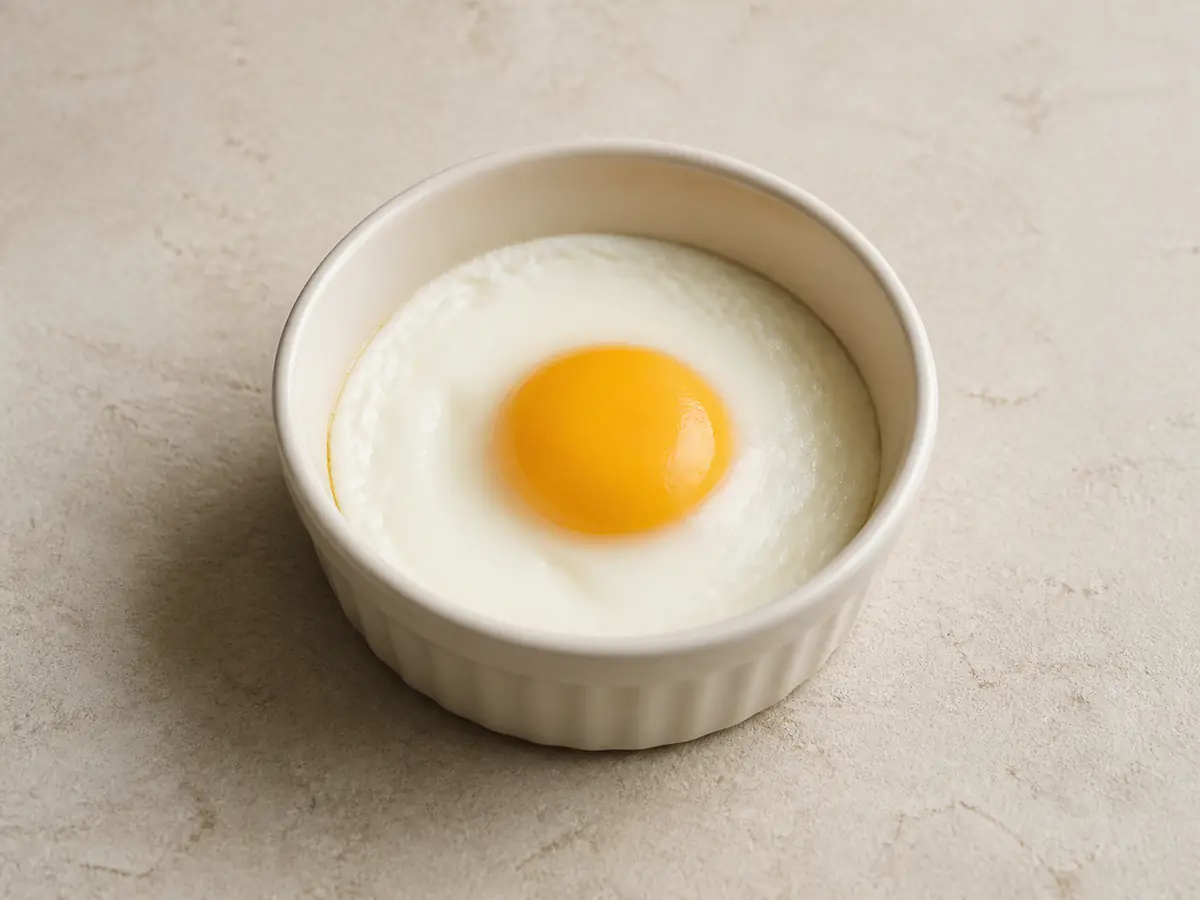
Air-fried Fried Eggs with a naturally browned surface.
Illustrative serving result. Browning and texture vary by food size, basket load, and air fryer.

Cooking Time & Temperature

Cut / variantTempTimeNotes
Fully set (over-hard)370°F190°C8–10 minYolk and white fully set through.

Personalize this cook

Adjust the selected timing estimate for portions, basket airflow, reheating, and doneness checks.

Portion & basket adjuster

Basket airflow

Adjusted cook: 370°F · 8–10 min

Start checking: 8 min.

Reheat mode

For already-cooked leftovers; use the main table for raw food.

Reheat estimate: 325°F / 165°C · 3–6 min

Reheat leftovers until hot all the way through; use a thermometer for meat, poultry, seafood, or egg dishes.

Doneness checker

Use time as a guide, then verify the center with a thermometer.

Eggs & egg dishes

Target internal temp: 160°F

Start checking: 6 min.

Measure at the thickest part, away from bone or basket edges.

Food Safety

Eggs & egg dishes: cook to 160°F (71°C). 160°F applies to egg dishes. For whole eggs, cook until both yolk and white are firm.

Source: USDA FSIS — Safe Minimum Internal Temperatures

Tips

  • Eggs cannot go straight on the basket — they run through the holes. Crack them into a greased oven-safe ramekin, a small metal pan, or a silicone dish.
  • Grease the dish with a little oil or butter before adding the egg so it releases cleanly.
  • Preheat the fryer so the white starts setting immediately and does not spread thin.
  • Check at the early end of the range — 30–60 seconds is the difference between a runny and a set yolk.
  • Season after cooking; salt sprinkled on beforehand can leave pale spots on the yolk.

Common Mistakes

  • Cracking the egg directly onto the basket or crisper plate, where it runs through before it can set.
  • Not greasing the dish, so the cooked egg tears when you try to remove it.
  • Cook whole eggs until both white and yolk are firm; egg dishes must reach 160°F (71°C).
  • Crowding several eggs into one small ramekin, which cooks them unevenly; use a wider pan or separate dishes.
  • Setting the temperature too high, which browns and toughens the white before the yolk is ready.

Result came out wrong?

Fast Fried Eggs fixes for the most common texture and doneness misses.

Use these fixes after a first attempt, then change only one variable at a time so you can tell what improved the next batch.

Dry or tough

Lower the next batch by 10-15°F or start checking Fried Eggs 2 minutes earlier. Keep pieces even in size and rest meat before slicing.

Soggy surface

Pat dry, avoid overcrowding, and add a light oil mist only after seasoning so airflow can crisp the surface.

Browning too fast

Drop the temperature one step, use the lower time range, and move sugar-heavy marinades or sauces to the final minutes.

Cold center

Split thicker pieces, preheat when recommended, and add short 1-2 minute bursts instead of restarting a full cook cycle.

Source & methodology

How we verify timings
Dataset
1 fresh preparation. Choose the closest cut, size and starting condition.
Units and appliance
Cooking Celsius values are rounded to practical dial settings. Your appliance may not offer every setting; consult its manual and check the food early.
Safety source
Eggs & egg dishes uses USDA FSIS — Safe Minimum Internal Temperatures; target 160°F (71°C).
Timing status
Editorial estimate. Not a lab measurement or manufacturer-specific instruction.
Review
Reviewed by Maks.

What supports these times?

The minutes are editorial starting estimates. No reproducible cooking log is attached to this food. Use the stated size and preparation, leave room for airflow, and check the endpoint rather than relying on the timer.

No food-specific manufacturer timing reference has been verified for these rows.

  • FoodSafety.gov — Safe Minimum Internal Temperatures

    Minimum internal endpoints and required rest periods. Does not validate air-fryer settings or minutes. Whole eggs and shellfish also have specific appearance guidance in the chart.

    Source section: Temperature chart: poultry, meat, seafood, eggs and leftovers. Reference checked: .

FAQ

How long do you air fry a fried egg?
Fully set (over-hard): 370°F (190°C), 8–10 min. These are editorial starting ranges, not a doneness test. Match the size and starting condition; use the safety endpoint on the food page and continue cooking if needed.
Can you fry an egg directly in an air fryer basket?
No. A raw egg runs straight through the holes in the basket or crisper plate. To fry an egg in an air fryer you need a greased oven-safe container set inside the basket — a small ramekin, a metal cake pan, a silicone mold, or a foil pouch. Grease it first so the cooked egg lifts out cleanly.
How do you get a runny yolk when air frying eggs?
FoodSafety.gov recommends cooking whole eggs until both white and yolk are firm. Soft or runny yolks do not meet that recommendation. For whisked egg dishes, verify 160°F (71°C) before removal. Use the fully set row on the food page as an estimate and check the result; do not depend on carryover heat.

Last updated September 5, 2026 · Reviewed by Maks