Loading…
How to Air Fry Salmon
Respuesta Rápida
For salmon — fillet — standard (1–1.5 in / 2.5–4 cm thick, 6 oz / 170 g) — start with 390°F (200°C) for an estimated 9–12 minutes. Cook fish to 145°F (63°C); shellfish should have pearly or white, opaque flesh. Use the preparation steps below and the full table for other sizes or starting conditions.
- FoodSafety.gov — Safe Minimum Internal Temperatures
Minimum internal endpoints and required rest periods. Does not validate air-fryer settings or minutes. Whole eggs and shellfish also have specific appearance guidance in the chart.
Source section: Temperature chart: poultry, meat, seafood, eggs and leftovers. Reference checked: .
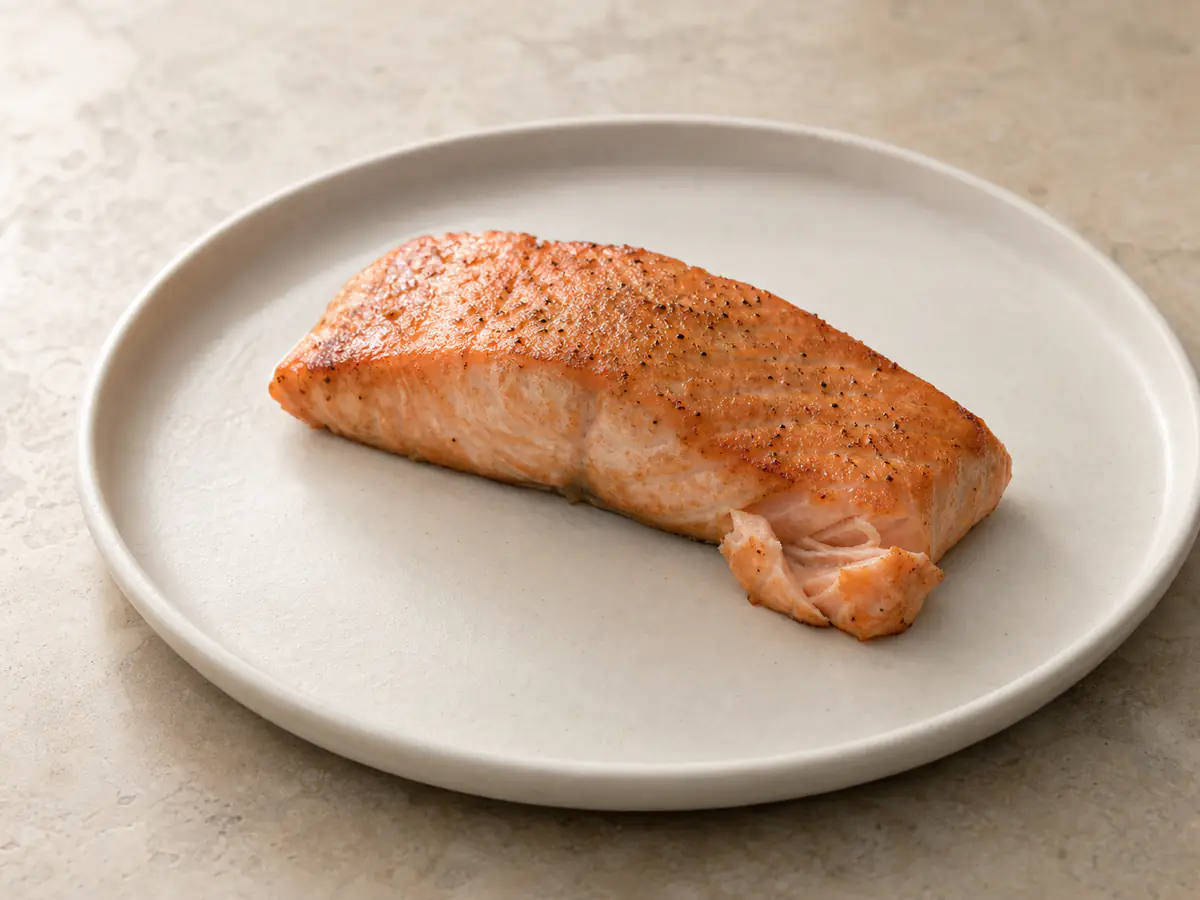
Choosing and preparing salmon
For air frying, wild-caught salmon (sockeye, coho) tends to be thinner and cooks faster; farmed Atlantic salmon is thicker and fattier and is more forgiving of slight overcooking. Remove pin bones before cooking (run a finger along the fillet to feel them; pull with tweezers). Pat the skin dry. Brush or spray the flesh lightly with oil — salmon has natural fat but a coat of oil promotes better browning on the flesh side. Season the flesh side with salt, pepper, and optional herbs or spice rubs. The skin side needs no seasoning.
Cooking: skin-side down, no flip
Place the salmon fillet skin-side down. The skin acts as a natural buffer, protecting the delicate flesh from the intense direct heat of the basket grate. Use the fillet — standard (1–1.5 in / 2.5–4 cm thick, 6 oz / 170 g) preparation. Set the air fryer to 390°F (200°C); the starting range is 9–12 minutes. Check at the lower end and continue as needed; thickness, load and the appliance affect the actual time. Cook fish to 145°F (63°C); shellfish should have pearly or white, opaque flesh.
Glazes and seasonings that work
Simple seasonings that work well: salt and pepper with a squeeze of lemon after cooking; garlic and herb (dried dill, garlic powder, onion powder); Cajun seasoning; dijon mustard with garlic pressed onto the flesh. For glazes with sugar (honey, teriyaki, maple): apply in the last 3 minutes only — earlier application causes burning. For a miso glaze (miso, mirin, sake), apply before cooking and reduce temperature to 375°F to prevent the sugars in the miso from charring.
Frozen salmon fillets
Frozen salmon can cook directly from frozen. Cook at 390°F for 14–18 minutes. At the 7-minute mark, pause and pat off any moisture that has released from the thawing fillet — this is the key step for getting a non-soggy result. At this point, add your seasoning since the surface is now dry and thawed. Continue cooking for another 7–11 minutes. Check temperature starting at 13 minutes total. Frozen fillets are harder to season evenly at the start — the two-stage method (cook partway, season, continue) produces better results.
Relacionado
Actualizado 5 de septiembre de 2026 · Revisado por Maks